
Donate
Your generosity is more than a gift—it is a lifeline.
Because of you, we are able to:
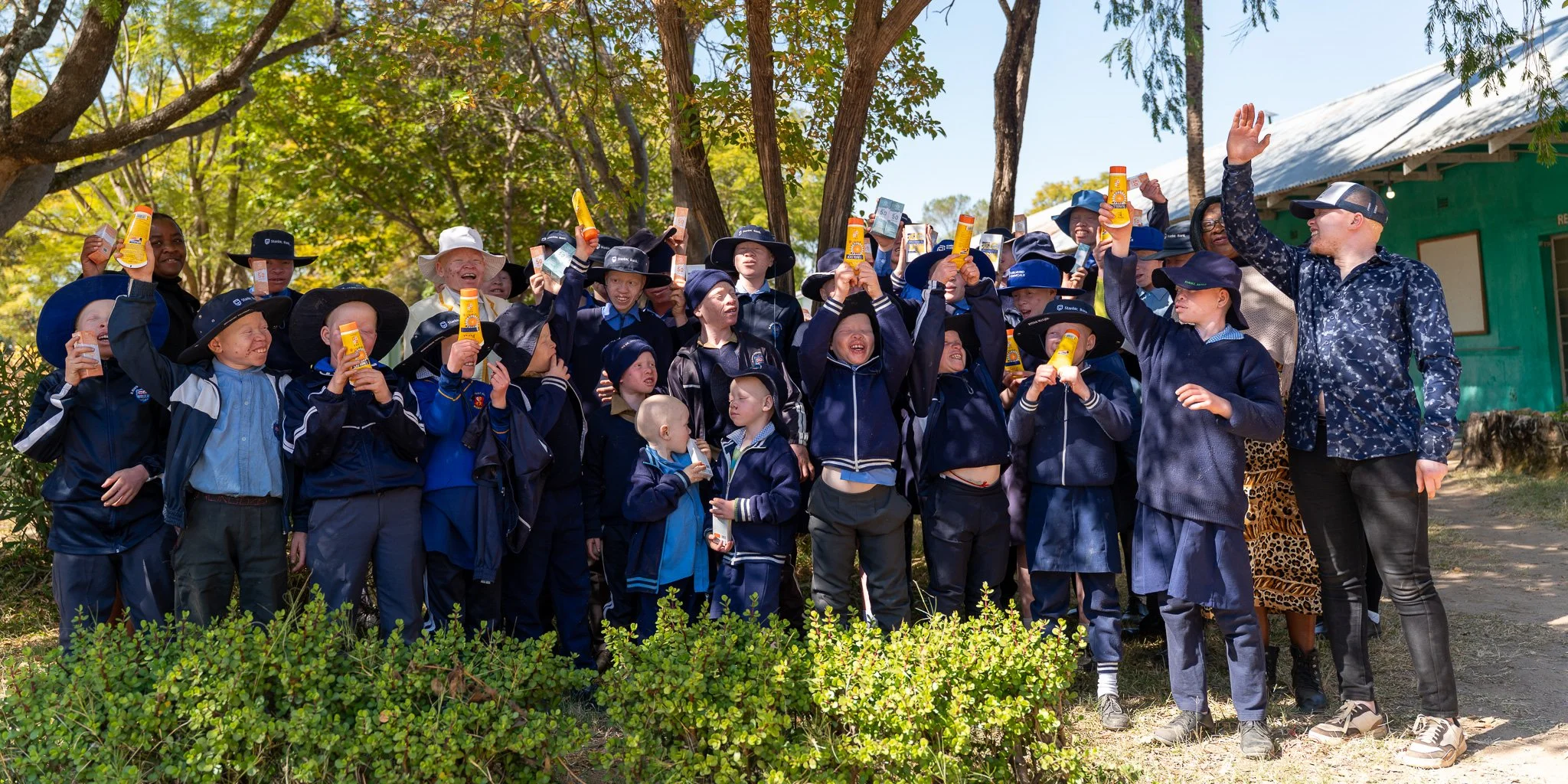
provide essential sunscreen monthly, protecting lives from preventable skin cancer.
help restore vision through access to glasses.
open doors to education by supplying braille machines and paper to schools.
launch small businesses that give individuals the opportunity to earn a living with dignity—away from prolonged exposure to the sun
strengthen security and improve living conditions in boarding schools.
create safer environments for those most vulnerable.
According to the most recent 2022 Zimbabwe Population and Housing Census, there are 9,753 people living with albinism in Zimbabwe. However, this number is most likely much higher. Albinism affects every aspect of a person’s life. We focus on four major areas where individuals are most impacted:
Culturally
The majority of people believe that albinism is a curse from the gods or an indication that a family has been cursed. It is also widely believed that when a couple has a child with albinism, it is a sign that the wife has been unfaithful. As a result, many marriages fall apart—reportedly 8 out of 10 end in divorce. None of this is true, yet it shapes the reality of suffering in this community. There are heartbreaking stories of parents who have thrown their newborn children into rivers because they could not bear the shame or accusations from society.
Socially
When someone is viewed as a curse or as the result of infidelity, they are often isolated. Many people believe albinism is contagious, so they avoid sharing food, water, or even physical space. Children are taught not to touch or play with those who have albinism. As a result, many individuals grow up in deep isolation, only finding community among others who share their condition. Even in adulthood, families may reject marriages involving a person with albinism, and there have been cases of lives lost due to poisoning within families they married into. None of these beliefs are true, yet they continue to shape daily life.
Physically
The lack of melanin makes individuals with albinism highly vulnerable to skin cancer. Sunscreen is essential, yet it can cost over $60 per month per person—an unaffordable expense for many in Zimbabwe. Employment opportunities are limited due to stigma, forcing many to work outdoors under harsh sun conditions just to survive. In rural areas, exposure is even greater through farming and livestock care. With limited education about their condition, many are unaware of the need for protective clothing, leading to late diagnoses. Although skin cancer is up to 95% treatable when detected early, many in this community lose their lives between the ages of 18–25. Access to care is extremely limited, with only one dermatologist in the country regularly screening individuals out of goodwill. Even when detected early, treatment often requires travel to neighboring countries—something most cannot afford. Vision is also affected. Many individuals cannot see clearly at a distance, yet the cost of seeing an optometrist and getting prescription glasses can reach $500, leaving most without the help they need. Sexual Abuse — A dangerous myth persists: that sleeping with a person with albinism can cure incurable diseases such as HIV/AIDS or cancer. This has led to a rise in sexual abuse, including forced relationships and child marriages involving young girls and women.
Spiritually
Some churches and religious gatherings have openly rejected people with albinism, refusing to worship alongside them. Others may allow attendance but exclude them from serving, even when they are gifted or willing. This adds another layer of rejection to an already difficult reality.
This only scratches the surface of what people with albinism face in Zimbabwe. The mental toll, trauma, and rising suicide rates reveal an even deeper level of suffering—one that many outside the community never see.